


House of Dank Michigan
4.5388.00 Reviews
App Specs
- Version
- 6.0.0
- Updated On
- License
- Free
- Downloads
- 10,000+
- Developer
- House of Dank
- Categories
- Medical
- Platform
- Android
Screenshots

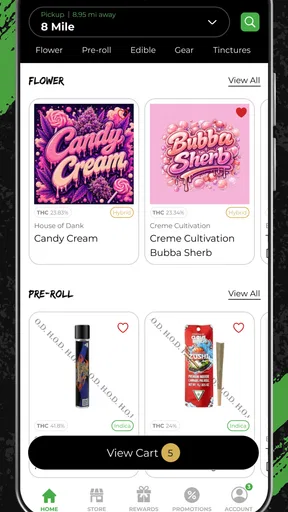
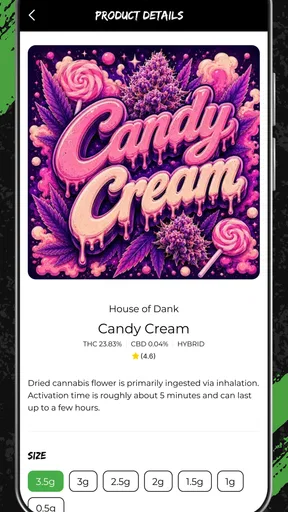
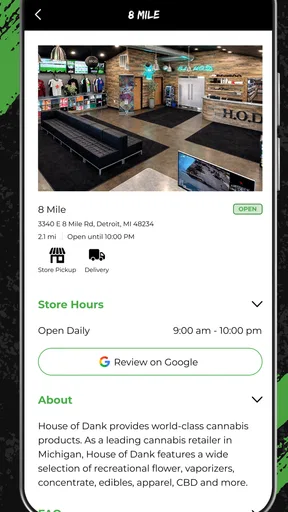
 Analysis by AppCompare
When I use a dispensary app, I want it to reduce the effort between deciding what I need and finding the right information. House of Dank Michigan is aimed at that practical moment. Developed by House of Dank, this free medical-category app focuses on the Michigan dispensary experience rather than trying to become a general lifestyle platform. That narrow purpose is its main appeal: if you already look to House of Dank for cannabis shopping, having its information in an app can feel more direct than repeatedly searching the web.
I approached House of Dank Michigan as a convenience tool, not as a medical authority or a replacement for professional advice. The mature age classification matters here, and anyone considering cannabis for a health-related reason should still speak with a qualified clinician. My overall impression is that the app makes the most sense for existing customers who want a focused way to check what the dispensary offers, while people comparing many unrelated retailers may prefer a broader marketplace or a browser search.
What the app is really useful for
The store summary describes it as a weed dispensary app, with the short description pointing specifically to House of Dank Michigan. That tells me the experience is centered on one retailer and one regional audience. It is not designed to be a neutral directory of every dispensary, and I would not install it expecting a wide comparison of competing stores.
That focus can be helpful in an everyday situation. Imagine I am planning a visit after work and do not want to arrive without knowing whether the products or categories I usually look for are available. A dedicated retailer app gives me a more relevant starting point than a general search engine, because I am already narrowing the decision to House of Dank. I can check the app before leaving, make a short list, and avoid spending the first part of the visit trying to remember product names or browse from a small phone screen at the counter.
The strongest use case is therefore preparation. I would open it before a planned dispensary trip, review the available choices, and keep my expectations realistic until I confirm the final details at the store. That last step is important with any retail catalog: availability can change, and an app should support a purchase decision rather than replace common sense about stock, local rules, or suitability.
For a returning customer, the value is even clearer. Instead of beginning with a broad search, the app puts the House of Dank identity first. That can save time when I already know where I want to shop. For a first-time visitor, however, the same narrow approach means I would spend more time learning about the retailer and deciding whether it fits my needs before the app becomes genuinely useful.
Speed expectations in normal use
I would judge this app by how quickly it gets me to useful dispensary information, not by how many extra features it appears to contain. A focused retail app has an advantage over a general browser search because it removes unrelated results and keeps the destination obvious. When I am checking options on the move, that reduced searching is a practical form of speed even before considering loading time.
Worth Reading Before You Choose

Flipboard Shows What News Apps Must Do Beyond the Feed

Switching to Android Auto Means Rethinking Your Driving Routine

Google Calendar Makes a Crowded Week Easier to Manage

Ludo King Makes the Most of the Minutes Between Plans

Baby Panda World Brings Quick Play to Modern Phones, but Its Game Library Feels Busy

ESPN’s Live Game View Makes Following Close Games Easier
At the same time, I would avoid treating a fast opening screen as proof that every part of the experience will feel instant. Retail information can depend on current content, and the most useful part of the app is likely the part that needs to present changing store information. If I am in a hurry, I would open it before walking into the shop rather than waiting until I am standing at the register.
This is one of the less obvious workflow tips I found useful: use the app as a planning layer, not as the only thing you rely on at the exact moment of purchase. I can browse calmly at home, note the products or categories that interest me, and then use the store visit to resolve anything that may have changed. That approach makes the experience feel faster because I am not trying to make every decision under time pressure.
The app is also more likely to feel responsive when I give it a simple job. Checking the retailer’s current offering is a sensible task. Expecting it to replace a full research process, answer medical questions, compare every Michigan option, and guide a complex purchase would create a slower-feeling experience simply because the tool is being asked to do more than its focused purpose suggests.
What happens during heavier browsing
Heavier use is not necessarily about technical strain. In this case, it is more about how much information I ask myself to process in one session. Browsing many products, comparing similar choices, and switching between details can become tiring on a phone even when the app itself behaves normally. A dispensary catalog is most useful when I approach it with a clear reason for opening it.
My preferred method is to begin with a specific need: a planned visit, a familiar product type, or a short list of questions. I would avoid scrolling aimlessly through the entire offering, especially if I am new to cannabis products. That is not a criticism unique to this app; it is a trade-off of a focused retailer catalog. The convenience of having one store’s information in one place can still leave me with many choices to interpret.
A second practical tip is to separate discovery from final selection. I can use the app to discover possibilities, then check the label and ask the dispensary staff for clarification before buying. This is particularly important for medical use, where a product’s name alone is not enough to determine whether it is appropriate. The app can help me organize the conversation, but it should not be the final authority on health decisions.
Resource demands are difficult to judge from the app’s public description alone, so I would keep expectations modest. It is a mobile retail tool, not something I would install for entertainment or continuous background use. In ordinary terms, I would open it when needed, browse, close it, and return later. That usage pattern is also kinder to battery and storage than leaving any shopping app active throughout the day.
Reliability and recovery when a session is interrupted
Reliability matters more here than flashy presentation. If I open a dispensary app before a visit, I want a predictable path back to the information I was reviewing. Phone use is often interrupted by calls, messages, travel, or simply putting the device away. A useful retail companion should fit that stop-and-start routine.
My recovery habit would be simple: if I am preparing for a purchase, I would write down or remember the key items rather than assuming the app will be the only record I need. That is not because I expect a particular failure; it is because stock and retail information can change, and a backup plan prevents a minor interruption from becoming a wasted trip. I would also reopen the relevant section before leaving if the visit depends on a specific choice.
The app’s established presence gives it some reassurance. It has an average rating of 4.5 from around 584 ratings, and its reach has passed 10 thousand installs. Those figures suggest that it has found a real audience, although they do not guarantee that every device or every session will feel identical. I read them as a reason to take the app seriously, not as proof that it is flawless.
Its current version is 6.0.0, which makes checking for updates a sensible part of normal maintenance. I would not assume that an older installation will always behave like the current release, especially when a retailer changes its catalog or app content. Keeping the app current can reduce avoidable friction, while still leaving me responsible for confirming important purchase details directly.
One recovery trade-off is the difference between app convenience and browser flexibility. If the app does not take me where I need to go, a browser may be the better fallback because it gives me another route to retailer information. Conversely, if the app presents the House of Dank experience more directly than a general search, it remains the cleaner first choice for an existing customer.
Device constraints and who should think twice
The app supports devices running Android 6.0 or later, so compatibility is not aimed only at the newest phones. That is helpful for people who keep an older Android device, but an operating-system minimum does not tell me how comfortable the experience will be on every screen size or hardware configuration. A newer phone may simply make browsing easier, especially when product information requires careful reading.
I would be cautious about using any dispensary app on a shared or borrowed phone. The subject matter is mature, and a private purchasing routine is easier to manage on a device I control. The mature 17+ classification also makes the audience clear: this is not an app for children, casual family browsing, or a young user looking for general wellness content.
Storage and battery are practical considerations, but I would not treat this as an app that needs to be running constantly. My approach would be to install it when I expect to shop with House of Dank, use it for planning, and remove it if I no longer need that retailer-specific convenience. Because it is free, trying it carries less financial risk, although the real cost is still attention: I should not spend time browsing products that do not match my needs or local purchasing situation.
There is also a geographic constraint built into the app’s identity. The Michigan focus is useful if I am shopping in that market, but it reduces the value for someone who lives elsewhere or travels frequently between states. A national directory, a multi-store marketplace, or direct browser research would be a better fit for someone who wants broad regional comparison rather than one Michigan retailer.
How it compares with the usual alternatives
The closest alternative is probably a mobile browser. A browser is more flexible: I can search several dispensaries, read independent material, and switch between sources. Its weakness is distraction. A broad search may lead me through outdated pages, unrelated retailers, or information that does not help me make a House of Dank visit.
A general cannabis marketplace offers the opposite trade-off. It may be better for comparing stores, product categories, and locations, but it can feel less direct when I have already chosen House of Dank. In that situation, the dedicated app’s narrow scope becomes a strength. I am not paying with money, since the app is free; I am paying with flexibility, because the experience is tied to one developer and one retailer identity.
Speaking with dispensary staff remains the better option when my question is personal, medical, or safety-related. An app can help me arrive prepared, but it cannot replace a conversation about what may be suitable for me. I would also choose a broader reference source when I need education rather than shopping assistance. That distinction keeps the app in its proper role and prevents disappointment.
Who will get the most from it
I think this is a good match for a returning House of Dank customer in Michigan who wants a direct, repeatable way to prepare for a dispensary visit. It is also reasonable for someone who prefers using a dedicated app instead of searching through a browser every time. The free price makes experimentation easy, and the retailer-specific focus means I do not have to sort through unrelated stores.
I would be less enthusiastic about recommending it to someone who has not decided where to shop, wants impartial product education, or needs a service covering several regions. That person may find a browser or a broader marketplace more useful. I would also skip it if I expected the app to provide medical guidance. The category may be medical, but shopping information and clinical advice are not the same thing.
My most useful routine would be to open the app before a planned visit, narrow my choices, check the details again close to departure, and ask staff about anything that affects safety or suitability. That workflow uses the app’s likely strength—focused retailer access—without making it responsible for decisions it should not make.
My performance verdict
House of Dank Michigan succeeds because it has a clear job. It is a free, retailer-focused app from House of Dank, released on October 26, 2022, and its 10K-plus installs show that the concept has reached a meaningful audience. I see it as a practical companion for Michigan customers who already want this dispensary, rather than a universal cannabis research tool.
In my view, its perceived speed comes mainly from removing unnecessary searching. Its heavier-use limitation is the amount of product information a small screen can make me process, not a reason to dismiss the app. Its reliability is best supported by a sensible routine: keep the app updated, prepare before the trip, and confirm important details when purchasing.
The best reason to install it is convenience for an existing House of Dank customer, not broad comparison or medical advice. If that describes you, the focused experience is worth trying, especially because there is no purchase price for the app itself. If you need independent education, cross-store shopping, or support outside Michigan, I would choose a broader alternative instead. For the right user, though, it can turn a vague dispensary visit into a more organized and less hurried one.
Pros
- Easy way to browse Michigan dispensary products in one place.
- Useful for comparing strains
- brands
- prices
- and product types.
- Helps users discover nearby cannabis retailers and delivery options.
- Product menus can make shopping faster before visiting a dispensary.
- Convenient for checking deals and promotions from participating stores.
Cons
- Availability and menu accuracy depend on participating dispensaries.
- Some listings may show products that sell out before checkout.
- Cannabis purchases require users to meet Michigan age requirements.
- Delivery and pickup options vary by location and retailer.
- The app may be less useful outside Michigan or supported service areas.
FAQs for House of Dank Michigan
What is House of Dank Michigan, and what can I find there?
House of Dank Michigan is a cannabis dispensary brand serving customers in Michigan through its retail locations and digital channels. Depending on the location, users can browse available flower, pre-rolls, concentrates, edibles, vapes, and other cannabis products. The app or website may also provide store information, menus, promotions, ordering options, and details about pickup or delivery availability.
Can anyone purchase products from House of Dank Michigan?
No. Cannabis purchases are restricted by Michigan law. Customers must meet the applicable age requirement and present a valid, government-issued identification document when required. Recreational customers generally need to be at least 21 years old, while medical purchases may involve additional requirements. Rules can vary depending on the product and purchase type, so customers should verify current regulations before visiting.
Does House of Dank Michigan offer pickup or delivery?
Availability depends on the specific House of Dank Michigan location and the customer’s address. Some stores may support online ordering for in-store pickup, while delivery could be limited by local regulations, operating hours, inventory, or service zones. Before placing an order, check the selected store’s menu and checkout information for minimum order requirements, fees, identification rules, and estimated fulfillment times.
What products and brands are available at House of Dank Michigan?
The selection can differ considerably between House of Dank Michigan locations and may change as inventory is updated. Menus commonly include cannabis flower, pre-rolls, edibles, concentrates, cartridges, tinctures, and accessories, with products from multiple Michigan brands. Product availability, potency, package size, and pricing should be confirmed through the current store menu rather than relying on older listings or previous visits.
Is the House of Dank Michigan app or online ordering service free to use?
Browsing the House of Dank Michigan menu or using its online ordering tools is generally free, although the final purchase price may include product costs, applicable taxes, delivery charges, or other service fees. Customers should review the complete checkout summary before confirming an order. If a mobile app is offered through a third-party platform, download availability and account requirements may vary by device and region.


